ISO/IEC 25010

The quality model is the cornerstone of a product quality evaluation system. The quality model determines which quality characteristics will be taken into account when evaluating the properties of a software product.

The quality of a system is the degree to which the system satisfies the stated and implied needs of its various stakeholders, and thus provides value. Those stakeholders’ needs (functionality, performance, security, maintainability, etc.) are precisely what is represented in the quality model, which categorizes the product quality into characteristics and sub-characteristics.

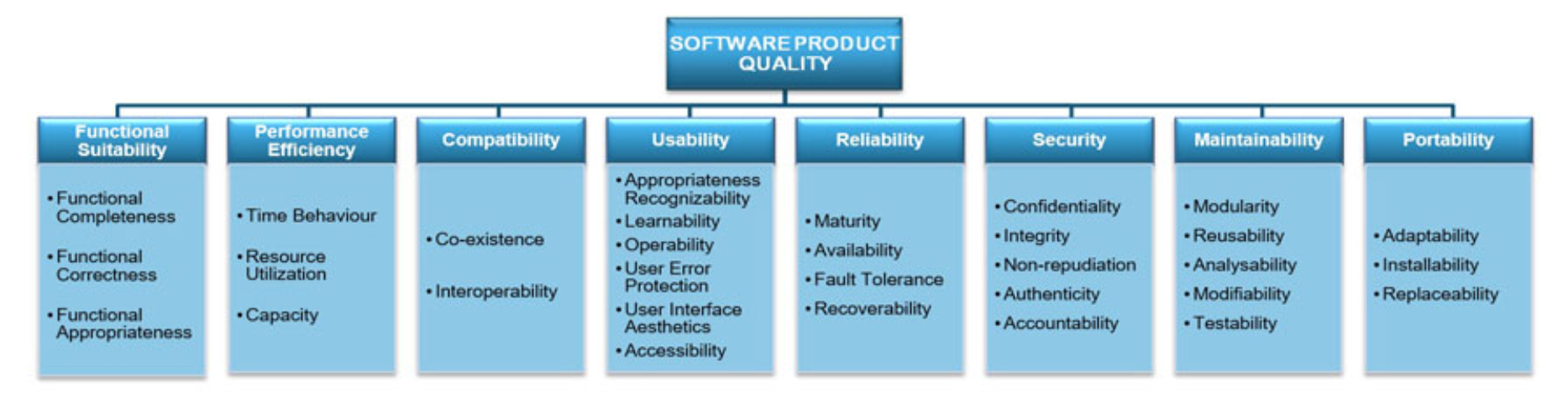
The product quality model defined in ISO/IEC 25010 comprises the eight quality characteristics shown in the following figure:


iso

WE ALWAYS HELP

997
996

frequently asked
questions

? What is Environmental Management System

It is a quality management system that connects with a company’s environmental program in a complete, planned, systematic and documented approach. It depends on factors such as the environmental policy of the organization, the nature of its activities, products, services, location and the conditions in which it functions.

? Benefits of Environmental Management System

The ISO 14001 certification can be issued to any business that wishes to effectively identify and manage its environmental impact, improve its operational efficiencies, lower costs and reduce environmental liability risks. This certification has become a requirement for businesses to address the environment in order to maintain customers, and exist in an ever more critical global economy. Waste of resources and creation of pollution are normally indications of areas for concern in the world of rapid industrialization.

? Why ISO ISO14001:2015 certification?

An environmental management system helps organizations identify, manage, monitor and control their environmental issues in a “holistic” manner. It emphasises on Continual Improvement in Environment Management System, such as protection of Environment, use of alternate energy sources, more green processes and packaging. ISO 14001:2015 can be integrated easily into any existing ISO management system. It requires that an organization considers all environmental issues relevant to its operations, such as air pollution, water pollution, waste management, land pollution, climate change mitigation and adaptation.


? Users of the standard have reported that ISO 14001

* Compliance with current and future Legal requirements.
* Increase leadership involvement and engagement of employees
* Improve company reputation and the confidence of stakeholders through strategic communication
* Development of New products/ Processes in line with futuristic expectations from legal authorities and customers.
* Greater Assurance to strategic business goals as environmental issues are linked into business processes
* Provide a competitive advantage through improved efficiencies, cleaner and greener usage of energy.
* Encourage better environmental performance of suppliers by integrating them into the organization’s business systems.

? Advantages

* Improved corporate image; strategic investment and regulatory relations.
* Improving the quality of the environment.
* Reducing incidents that may be detrimental to working in the long run and causing liability.
* Conserve natural resources and energy and help in getting the required legal consent.
* Sharing environmental solutions and improving industry and government relationship.
* Evaluates system performance through management review and correct management system deficiencies.

? More Specific Benefits

* Improvements in overall environmental performance and compliance.
* Provides a framework for using pollution prevention practices to meet EMS objectives.
* Increased efficiency and potential cost savings when managing environmental obligations.
* Promote predictability and consistency in managing environmental obligations.
* More effective targeting of scarce environmental management resources.
* Minimize environmental liabilities
* Maximize the efficient use of of natural resources (electricity, water, gas and fuels.)
* Reduce waste
* Demonstrate a good corporate image
* Build awareness of environmental concern among employees
* Gain a better understanding of the environmental impacts of business activities
* Reduction of the impact (e.g. noises, smells, dust) of activities on immediate neighborhood, leading to more community support and increase profit, improving environmental performance, through more efficient operation

alt
alt
alt

CONTACT US

We are here to help you